
Climate Risks to Heritage and Livelihoods
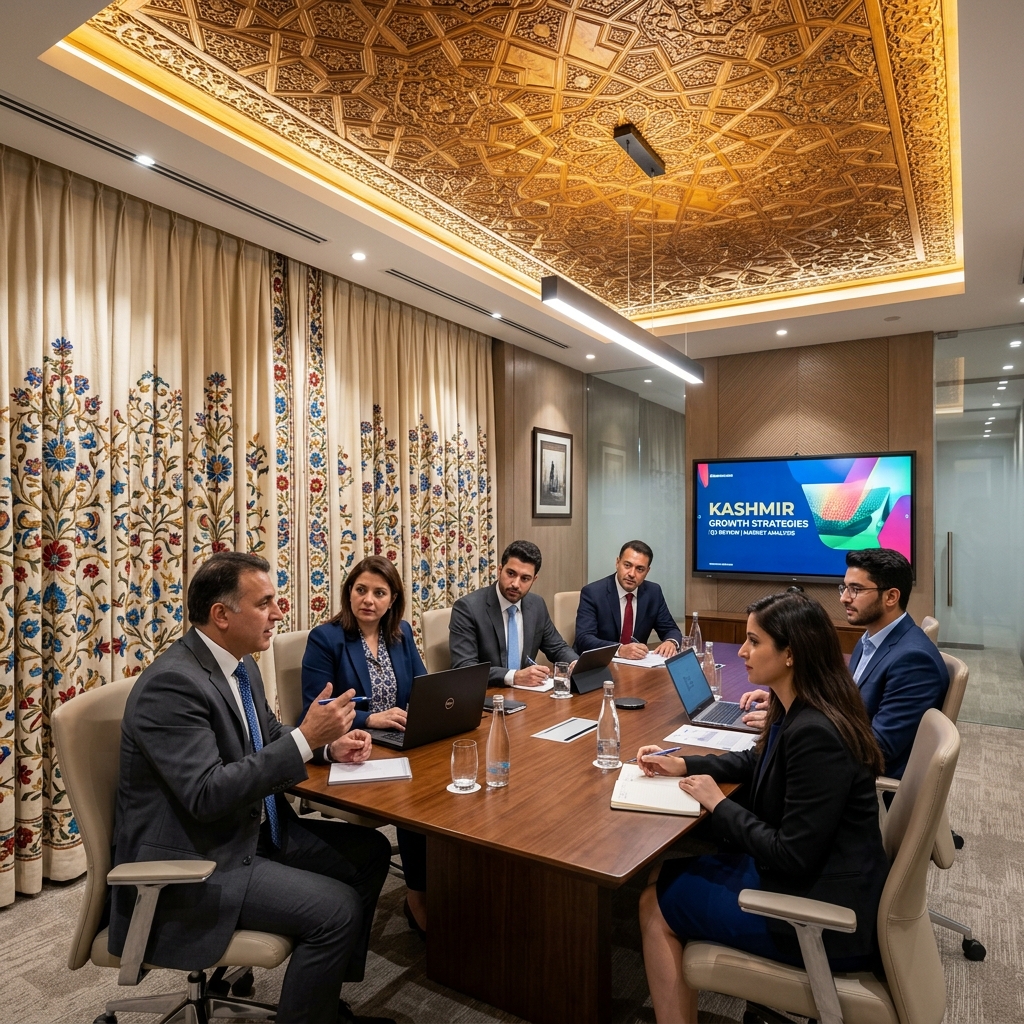
Climate change presents an unprecedented challenge to the traditional craft sector. Extreme weather, seasonal disruptions, and natural resource depletion directly threaten the raw materials and artisan livelihoods that form the backbone of Kashmir's heritage.
International buyers increasingly expect sustainability evidence. Climate-ready businesses are better positioned for future markets, funding, and operational stability.
"Climate resilience in craft is not only about reducing environmental impact. It is about protecting materials, skills, livelihoods, production continuity and the transmission of living heritage."
Enterprise Benefits
Evaluate and optimize your craft business to withstand environmental challenges and secure long-term sustainability. Achieve excellence through structured evaluation and global market readiness.
Identify Vulnerabilities
- ✓ Identify climate risks
- ✓ Assess resource vulnerabilities
- ✓ Improve material efficiency
- ✓ Optimize energy and water use
- ✓ Strengthen supply-chain continuity
- ✓ Mitigate seasonal disruptions
Market Readiness
- ✓ Document environmental performance
- ✓ Meet international buyer expectations
- ✓ Provide sustainability evidence
- ✓ Prepare for regulatory requirements
- ✓ Enhance global brand positioning
- ✓ Access responsible sourcing networks
Funding & Heritage
- ✓ Position for climate funding
- ✓ Identify grant opportunities
- ✓ Access technical support networks
- ✓ Protect traditional knowledge
- ✓ Ensure craft continuity
- ✓ Secure artisan livelihoods
KHCRF Climate Resilience Evaluation
Assess your enterprise across core areas to establish a baseline and identify actionable pathways toward advanced climate resilience.
Exposure & Resources
- ✓ Heat and extreme weather exposure
- ✓ Seasonal disruption planning
- ✓ Water stress and dependency
- ✓ Raw-material vulnerability
- ✓ Energy use & efficiency
- ✓ Waste management & natural dyes
- ✓ Emissions and lifecycle impacts
Artisan & Operations
- ✓ Livelihood continuity strategies
- ✓ Workforce vulnerability assessment
- ✓ Production disruption planning
- ✓ Skill transmission continuity
- ✓ Workshop physical resilience
- ✓ Emergency preparedness
- ✓ Community support integration
Market & Transition
- ✓ Buyer sustainability alignment
- ✓ Traceability infrastructure
- ✓ Environmental documentation
- ✓ Responsible sourcing verification
- ✓ CLEE framework integration
- ✓ Access to climate-linked funding
- ✓ Transition pathway planning
Craft Lifecycle & Emission Engine CLEE
Lifecycle intelligence for handmade craft systems
CLEE evaluates material use, energy, water, transport, waste and lifecycle emissions across traditional craft production while preserving the cultural and artisanal context that industrial carbon models often miss.
Materials Intelligence
Raw-material origin, sourcing risk, toxicity, extraction pressure
Resource Intensity
Energy, water, process efficiency, production dependencies
Lifecycle Emissions
Transport, processing, waste routing, localized emission factors
Evidence Confidence
Data quality, documentation strength, gaps, traceability
How CLEE feeds the assessment
CLEE does not determine an enterprise's resilience status on its own. It provides the environmental evidence layer used alongside operational, livelihood and supply-chain factors.
Explore the CLEE methodology
Understand lifecycle boundaries, emission factors, evidence quality and craft-specific environmental assessment.

How It Works
Complete the Climate Resilience Assessment
Provide information about your craft enterprise, materials, production systems, resource dependencies, artisan livelihoods, supply chain and exposure to climate-related risks.
Upload Supporting Evidence
Attach relevant records such as material sourcing information, energy or water data, production records, photographs, environmental documentation, certifications or other supporting evidence.
KHCRF Reviews Your Resilience Profile
KHCRF evaluates the submitted information against applicable climate, resource, operational, artisan-livelihood and market-readiness factors. Additional evidence or field verification may be requested where necessary.
Receive Climate Resilience Findings
Receive a structured assessment identifying key vulnerabilities, current resilience practices, priority actions, evidence gaps and opportunities for improvement.
Your application and supporting evidence are handled under KHCRF’s privacy and security requirements.
Build a More Resilient Craft Enterprise
Assess your enterprise's exposure to climate and resource pressures, strengthen operational continuity, protect artisan livelihoods and identify practical pathways toward long-term resilience.
KHCRF's Climate Resilience Assessment supports artisan enterprises, businesses, cooperatives and institutions across the Kashmir craft sector. The framework examines climate exposure, materials and resource use, production continuity, supply-chain vulnerability, environmental performance, artisan livelihoods and market transition readiness. Supporting evidence is reviewed where available, and additional verification may be undertaken when required.
Evidence & Intelligence Integration
Where appropriate, validated climate-resilience findings may contribute to KHCRF and Craftlore research, sustainability intelligence and responsible trade frameworks, subject to applicable privacy and data-governance requirements.
RESILIENCE MATURITY PATHWAY
KHCRF identifies enterprises along a structured resilience maturity pathway. This is not a prestige ranking, but a structured roadmap to support artisan communities facing climate disruption.
How recognition works
KHCRF verifies evidence → Craftlore evaluates trust and ranking → Craftlore may assign recognition tiers
Enterprises at this level demonstrate mature resilience systems, evidence-based environmental practices and strong continuity planning.
Active KHCRF registration, verified standing, good standing, and selection through Craftlore review.
Increased prominence in portfolio discovery and trust-led buyer evaluation.
Assigned manually, not automatically by raw score.
Core resilience practices are implemented across resource use, production continuity, supply-chain management and artisan livelihoods.
Evidence-supported assessment demonstrating strong performance across applicable resilience domains.
May support market readiness, buyer confidence, and funding preparedness.
Assigned through KHCRF review and evidence assessment, not automatically from a raw score.
The enterprise has identified key climate risks and begun planning or implementing resilience measures.
Evidence of planning or implementation of foundational resilience measures.
First step toward accessing dedicated support networks and technical assistance.
Assigned through KHCRF review and evidence assessment, not automatically from a raw score.
The enterprise is beginning to document climate exposure, resource dependencies and operational risks.
Participation in baseline assessment and documentation.
Establishes a starting point for improvement and support.
Assigned through KHCRF review and evidence assessment, not automatically from a raw score.
KHCRF provides climate-resilience evaluation and may identify relevant support opportunities. Grant eligibility, selection and funding decisions remain subject to the criteria and decisions of the respective funding institutions.
Integrated Funding & Climate Support Pathway
KHCRF supports qualifying craft enterprises in identifying relevant funding and support opportunities across areas including:
As part of this pathway, Kashmir Hamadan Craft Revival Foundation (KHCRF) and Kashmir EcoWatch (KEW) work collaboratively to strengthen the craft, heritage, livelihood, environmental and resilience dimensions of climate and sustainability proposals.
KHCRF Role
KHCRF focuses on:
- craft-enterprise assessment
- artisan livelihoods
- heritage safeguarding
- resilience needs
- business continuity
- identification of relevant grant and support opportunities
Kashmir EcoWatch Role
Kashmir EcoWatch (KEW), a Kashmir diaspora-supported public-interest environmental intelligence initiative supported by Dr. Kumar Foundation USA, contributes:
- environmental research
- climate-risk interpretation
- geospatial analysis
- field and district intelligence
- scientific evidence development
- technical framing
- resilience-focused project design
How the collaboration works
KHCRF and KEW may support opportunity identification, evidence development, technical framing and proposal preparation. Grant eligibility, selection and funding decisions remain entirely with the respective funding institutions.